 简体中文
 繁體中文
 English
regulatory agency
the Bank of Lithuania and relevant competent authorities
Confirm the receiving unit and powers against the latest public information from the Bank of Lithuania and the relevant competent authorities.
Explain the transition of Lithuania’s old VASP registration to the EU MiCA CASP authorization system.
The former Lithuanian virtual-currency exchange and custodian-wallet registration cannot replace CASP authorisation under EU MiCA.. Current applications are assessed bythe Bank of Lithuania (LB)under MiCA, Whether a former VASP may continue depends on the applicable transition and its application status.
hosting, trading platform, crypto-to-funds or crypto-to-crypto exchange, order execution, transfer, placing, advice and portfolio management must be selected service by service under MiCA. CASP authorisation, EMI licensing and banking services address different regulatory issues, where fiat accounts or e-money are involved, a parallel structure may be required.
Important tips: EU MiCA has replaced the former local VASP registration approach, The former registration should no longer be presented as a permanently valid licence.
the Bank of Lithuania and relevant competent authorities
Confirm the receiving unit and powers against the latest public information from the Bank of Lithuania and the relevant competent authorities.
MiCA crypto-asset service provider (CASP) authorisation
EU MiCA has replaced the former local VASP registration approach, The former registration should no longer be presented as a permanently valid licence.
Authorised scope and ongoing obligations
This page cross-checks public rules, application-document structures and practical business processes.
The following points define the project scope for a Lithuanian MiCA CASP authorisation; The actual business and official determination remain controlling.
The application should explain the proposed crypto-asset trading and exchange products, client, channel, transaction flows, revenue model and controls.
The application should explain the proposed custody and client-asset administration products, client, channel, transaction flows, revenue model and controls.
The application should explain the proposed order execution, products relating to transfer or advice, client, channel, transaction flows, revenue model and controls.
The Bank of Lithuania and relevant competent authorities generally assess the applicant entity, personnel, business substance and risk controls; The required depth of documentation varies by project.
official information: Bank of Lithuania official authorisation information. Before submission, recheck the latest forms, cost, timelines and technical requirements.
Explain each proposed crypto-asset trading and exchange service, Custody and client-asset administration, order execution, transfer or advice, including customers, regions, channel, products and money flows.
Disclose shareholders, ultimate controllers, directors and key individuals, and prepare evidence of integrity, experience and source of funds.
Establish responsibilities, conflict of interest, complaints, outsourcing, business continuity, cyber security and financial controls.
Establish customer due diligence based on the risk assessment, Continuous monitoring, Sanctions Screening, suspicious transaction report, recordkeeping and training.
Article 67 of MiCA requires a CASP to maintain prudential safeguards at all times, of at least the higher of permanent minimum capital and one quarter of the preceding year’s fixed overheads; A CASP that has not been in business for one year, uses the projected fixed overheads for the first 12 months in its application.
The applicant must have a registered office and effective management in the EU, Management and qualifying shareholders must pass suitability checks, and the applicant must establish compliance, AML, risk, information-security and client-asset protection functions.
office, Registered office and recordkeeping locations should be checked separately. Where the regulator requires local substance, a mail-forwarding address cannot substitute for actual management, client service, systems control and access to records.
A budget should separate Lithuanian state fees, MiCA permanent minimum capital and prudential safeguards, corporate and premises costs, staffing and professional fees. Capital is not an application fee; No guaranteed approval timetable or fixed total price should be stated without an official basis.
| Budget item | Basis of calculation | Checkpoints |
|---|---|---|
| Regulatory application and amendment fees | The Lithuanian state fee for issuing a CASP licence is EUR 2, 425; The fee to amend the licence is EUR 272. Pay in accordance with the applicable official payment instruction, separately check annual regulatory or supervisory charges. | Keep state fees separate from professional fees; Do not describe capital, margin, adviser or company-formation fees as a licence fee. |
| capital, Prudential safeguards and insurance | The permanent minimum capital under MiCA is EUR 50, 000, 125, 000 or 150, 000, compare it with one quarter of prior-year fixed overheads, and apply the higher amount; A firm in business for less than one year uses the first 12 months of projected fixed overheads in its application. | Article 67 of MiCA requires a CASP to maintain prudential safeguards at all times, of at least the higher of permanent minimum capital and one quarter of the preceding year’s fixed overheads; A CASP that has not been in business for one year, uses the projected fixed overheads for the first 12 months in its application. Capital is not an application fee; Prudential safeguards may consist of own funds, qualifying insurance or both. |
| Company formation and statutory maintenance | Budget separately according to the place of registration, share capital, registered agent, secretary, Registered address, annual return and tax filings. | Company formation does not mean that a licence or bank account has been approved. |
| Office and personnel | Calculate according to the lease, deposit, floor area, use, local remuneration, visa and local-presence requirements.. | Confirm the substantive requirement accepted by the regulator, before signing a lease or hiring staff.. |
| Policies, systems and professional services | Budget according to business complexity for AML/KYC, Sanctions Screening, transaction monitoring, network security, audit, legal advice, translation and notarisation according to business complexity.. | Quotes should set out the scope, hypothesis, third-party costs and the number of response rounds. |
The timeline depends on business complexity,, document completeness and queries from the Bank of Lithuania and other relevant authorities, so a fixed approval time should not be promised..
put product, client, regions, channels and money flows to the authorised scope of the MiCA CASP authorisation.
Determine the applicant, Equity, director, key personnel, premises and outsourcing arrangements.
Prepare the business plan, financial forecasts, organisational structure, risk assessments and compliance policies.
Submit to the Bank of Lithuania and other relevant authorities, respond to information requests, Interview, system demonstrations or inspections.
Check the licence conditions, and complete the capital, personnel, system, client-asset and filing arrangements.
After authorisation, a CASP must maintain capital, governance, customer assets, complaints, ICT, outsourcing and regulatory reporting, and make MiCA notifications for cross-border services. product, wallet, Token or control changes should follow the formal change process.
Compare the EU route withEstonia MiCA CASP authorisation requirementsandCzech MiCA CASP authorisation requirements; For payments, seeLithuania EMI licence scope. Licensed, registration or membership maintenance can be assessed withLicense renewal, filing and maintenance service scopetidy.
The Lithuanian MiCA transition ended on 31 December 2025; The Bank of Lithuania explained in June 2026 that, the EU-wide MiCA transition ended on 1 July 2026. The former virtual-currency exchange and custodian-wallet registration can no longer be relied upon to continue operations, A former VASP should verify whether it has obtained MiCA CASP authorisation or meets another applicable route.
Official sources to check: Bank of Lithuania official authorisation information.
Update note: regulatory scope, capital, personnel, cost, timelines and ongoing obligations may change, Before proceeding, follow the authority’s current rules, forms and case-specific determination.
This checklist supports preparation and communication for a Lithuanian MiCA CASP authorisation, and maps the business description to verifiable evidence; the final submission items depend on the requirements of the applicable authority.
For document and question checklists, seethe EU MiCA CASP authorisation comparison; Before proceeding, verify the official current requirements for this route.
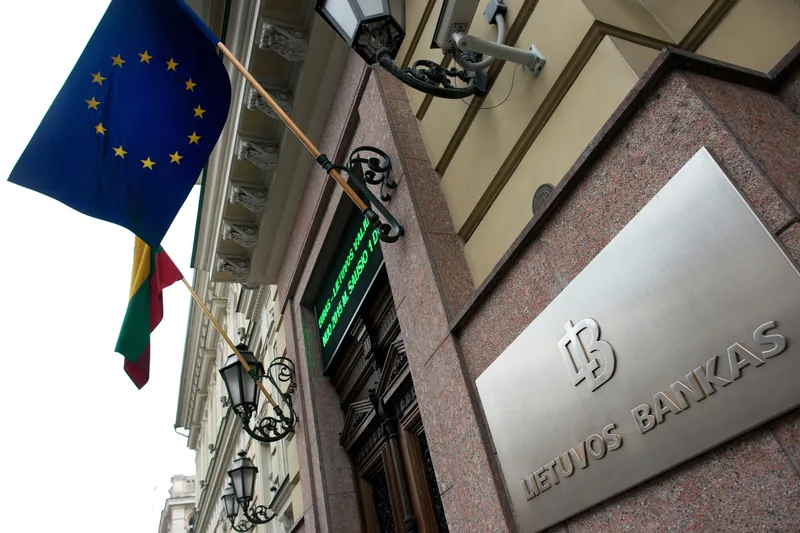
The former Lithuanian virtual-currency exchange and custodian-wallet registration cannot replace CASP authorisation under EU MiCA.. Current applications are assessed by the Bank of Lithuania (LB) under MiCA, Whether a former VASP may continue depends on the applicable transition and its application status. hosting, trading platform, crypto-to-funds or crypto-to-crypto exchange, order execution, transfer, placing, advice and portfolio management must be selected service by service under MiCA. CASP authorisation, EMI licensing and banking services address different regulatory issues, where fiat accounts or e-money are involved, a parallel structure may be required.
Official source: Bank of Lithuania official authorisation information
The application must demonstrate effective EU management, shareholders and management, Prudential protection, client assets and wallets, token due diligence, complaints, conflict of interest, market abuse, DORA and ICT, outsourcing, AML/CFT and exit planning. People and systems must genuinely operate in Lithuania.
After authorisation, a CASP must maintain capital, governance, customer assets, complaints, ICT, outsourcing and regulatory reporting, and make MiCA notifications for cross-border services. product, wallet, Token or control changes should follow the formal change process.
Verify the Lithuanian transition and the status of the former registration; Do not describe a VASP registration certificate, company registration or AML registration as an EU-wide crypto licence. See the latest rulesBank of Lithuania official authorisation information.
Policies should be based on the firm’s customers, Country or region, product, channels and transaction characteristics to form the business risk assessment, and implemented through customer due diligence, beneficial-owner identification, ongoing monitoring, sanctions and politically exposed person screening, escalation and reporting of suspicious transactions, record keeping, staff training and independent testing. A generic template, without justified thresholds or operational records, is usually insufficient to show that the framework operates.
MiCA sets three tiers of permanent minimum capital: Class 1: EUR 50, 000, Class 2: EUR 125, 000, Class 3: EUR 150, 000; Class 3 includes operating a crypto-asset trading platform. Actual prudential safeguards must be compared with one quarter of the previous year’s fixed overheads, with the higher amount applying, A firm in business for less than one year uses the projected first 12 months of fixed overheads in its application. This amount is not an application fee paid to the Bank of Lithuania, and is not merely registered share capital or a shortfall that may be filled temporarily from funds of unexplained origin; Prudential safeguards may consist of own funds, insurance meeting Article 67 of MiCA or a combination of both. SeeArticle 67 of MiCAandESMA minimum-capital classificationSubject to.
The answer depends on local law, eligibility for MiCA CASP authorisation, the proposed activities and outsourcing model. Even where the rules do not prescribe one universal job title or office size, the Bank of Lithuania may still examine decision-making, Record, client service, risk management and regulatory communications have sufficient local substance; Before leasing premises or hiring personnel, check the requirements for the particular case.
Review time depends on application completeness, business complexity, key-person suitability, Regulatory inquiries, interviews, demonstrations and third-party evidence, No fixed approval date should be promised. The project plan should separate preparation, submission, Supplementary parts, technical remediation and post-authorisation launch, and retain sufficient contingency; Only the competent authority decides whether to accept and authorise the application.
Generally not. The applicant should complete provider due diligence, explain data flows, service levels, Audit right, subcontracting, information security, business continuity and exit arrangements, and retain oversight of rules, thresholds, alerts and major incidents. Whether outsourcing is permitted and what notification or approval is needed, must be checked against the Bank of Lithuania’s current rules.
A filed application, under review or completed company registration should not be described as approval. Before formally conducting regulated activities,, actively soliciting clients,, accepting client funds or publishing potentially misleading licence statements,, confirm that authorisation is effective, the business does not exceed the authorised scope, and check the cross-border marketing rules in the locations of the target clients..
Common obligations include renewals or annual fees, Regulatory filing, financial or compliance audits, training, record keeping, complaint handling, client-asset and capital monitoring, and notification or approval for changes in ownership, director, key personnel, address, Business scope, systems and major incidents. Maintain a compliance calendar and change-approval process, and regularly obtain updates from the Bank of Lithuania.
should beBank of Lithuania official authorisation informationpublished there, application forms, guidance, fee schedules and notices as the current reference. 88MSO helps organise questions and materials, but does not represent a regulator, and cannot replace advice from local counsel, a tax adviser or the regulator on a particular case.
Compare the EU route withEstonia MiCA CASP authorisation requirementsandCzech MiCA CASP authorisation requirements; For payments, seeLithuania EMI licence scope. Licensed, registration or membership maintenance can be assessed withLicense renewal, filing and maintenance service scopetidy.
The Lithuanian state fee for issuing a CASP licence is EUR 2, 425, The fee to amend the licence is EUR 272, under item 3.157 of Government Resolution No 1458; bank details, and payment references should follow current Bank of Lithuania and tax authority information. This state fee is not MiCA minimum capital or the prudential safeguard based on one quarter of fixed overheads. Company establishment, office, personnel, system, audit, legal and advisory services are separate, Annual regulatory or supervisory charges are not included in the state licence-issue fee. Seecurrent Lithuanian state-fee scheduleandBank of Lithuania CASP fee FAQSubject to.
The applicant should be confirmed first, statutory registered office, actual management location, and distinguish these from customer reception and recordkeeping locations, then budget for registration fees, agent or secretary, rent, deposit, furnish, communications, Insurance, visas and local staff. Leasing before defining the regulatory boundary, may create unrecoverable costs.
no. Check the actual authorisation and applicable status under MiCA, Do not market a past company or AML registration as a current EU-wide licence.
cannot. Setup, application and authorised operation are different stages, verify the entity in the regulator’s register, services and status.
Can't. The Bank of Lithuania states, a non-CASP must not use a name or marketing communication suggesting that it is a CASP. Application acceptance, ordinary company formation and formal authorisation, must be clearly distinguished on websites and customer materials. See the sourceBank of Lithuania rules on CASP status and marketing.
no. MiCA sets a specific route for certain financial institutions; The Bank of Lithuania identifies, the EMI route is limited to custody of the e-money tokens it issues, administration and transfer services, and requires the applicable prior procedure, It does not extend to all tokens or trading-platform activity. See the sourceBank of Lithuania scope for EMIs providing crypto-asset services.
No. A non-exempt applicant may provide only the services in its authorisation, Before providing custody, exchange, trading-platform or other services, check whether each activity is included in the authorisation, do not treat the CASP label alone as approval of all activities. See the sourceBank of Lithuania CASP authorisation scope.