简体中文
简体中文 繁體中文
繁體中文 English
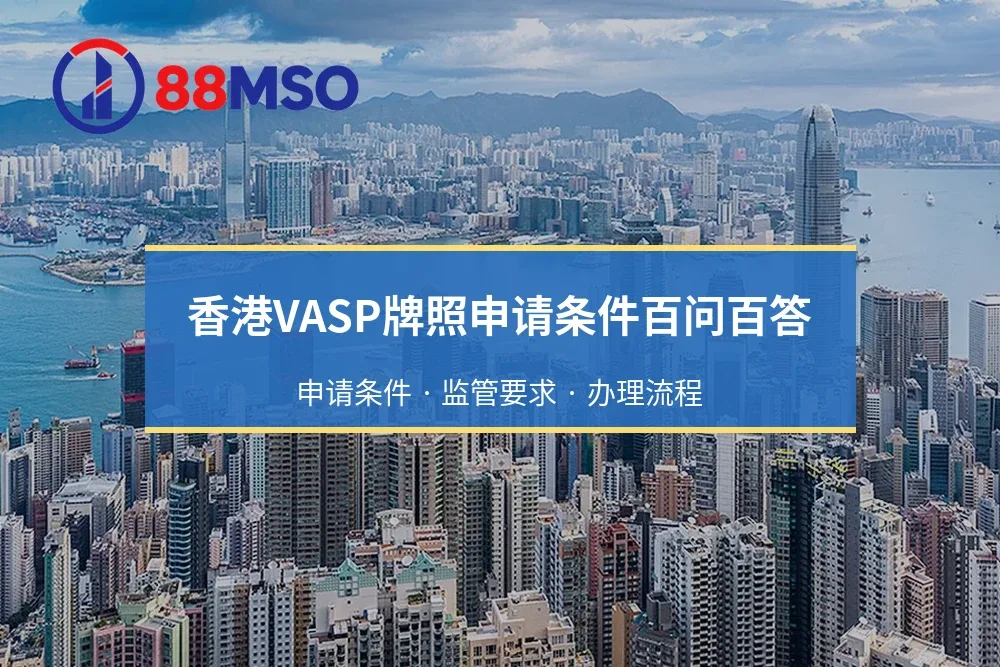
Questions and Answers on Hong Kong VASP License Application Requirements:SFCRetail rules and cold wallet asset isolation details
As Hong Kong continues to promote the standardization of the virtual asset market,VASP (Virtual Asset Service Provider) license has become a trading platform、The “ticket” for custodians and related financial technology companies to enter the compliance track。What many companies are most concerned about when consulting is not “should I apply?”,Rather:What are the application requirements? What are the boundaries of SFC's business with retail investors? How can cold wallet asset isolation be truly compliant?
This article adopts the practical perspective of "a hundred questions and a hundred answers",System sortingHong Kong VASP Licenseframe,Focus on analyzing retail rules and cold wallet custody details,And give implementation suggestions based on common misunderstandings。For teams planning to deploy crypto financial business in Hong Kong and even globally,These questions determine whether you "get a license",Or "can operate stably even after getting the license"。
one、What is a Hong Kong VASP license? Who must apply?
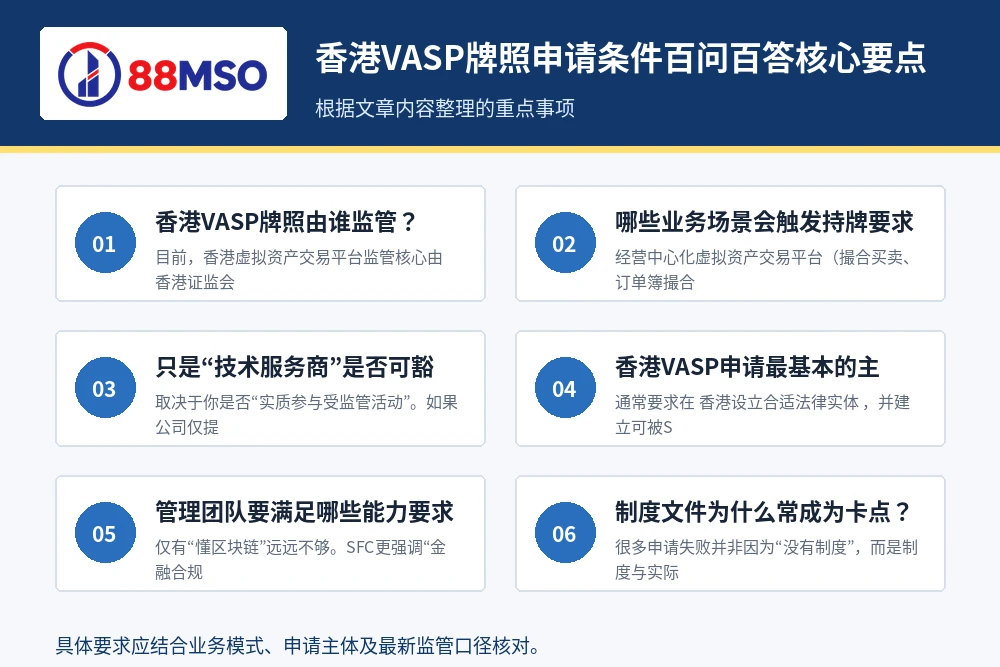
Q1:Who supervises VASP licenses in Hong Kong?
at present,The core regulation of Hong Kong’s virtual asset trading platform is composed ofSecurities and Futures Commission of Hong Kong (SFC)leading。For platforms that provide regulated virtual asset services,License is not optional,It is a legal obligation that must be met。
Q2:What business scenarios will trigger licensing requirements?
- Operating a centralized virtual asset trading platform (matching transactions、Order book matching, etc.);
- Involves custody of customer assets or control of customer private keys;
- Providing virtual asset trading services to Hong Kong investors (especially retail customers);
- business promotion、client solicitation、Continuous services are launched in Hong Kong。
Q3:Can only “technical service providers” be exempted?
Depends on whether you "substantially engage in regulated activity"。If the company only provides pure technical outsourcing,No contact with client assets、Not involved in matching or transaction execution,Regulatory risk is relatively low;But once it enters the category of "platform operation + customer access + asset control",Licensing requirements are difficult to avoid。
two、Core application requirements:company、personnel、system、System four-in-one
Q4:What are the most basic subject requirements for VASP application in Hong Kong?
Usually requires the establishment of a suitable legal entity in Hong Kong,and establish an equity and control structure that can be penetrated and reviewed by the SFC.。Supervision pays special attention to:
- Ultimate Beneficial Owner (UBO) Transparency;
- Fit and Proper candidates for directors and management;
- Legality of funding sources and sustainable operating capabilities;
- No record of significant integrity or criminal compliance deficiencies。
Q5:What competency requirements does the management team need to meet?
Just “understanding blockchain” is not enough。SFC places more emphasis on “financial compliance management capabilities”,include:
- Anti-money laundering and counter-terrorism financing (AML/CFT) governance experience;
- risk management、Internal control audit、Abnormal transaction monitoring capabilities;
- Information security and managed security architecture management capabilities;
- Ability to continuously implement regulatory reporting、Incident reporting and rectification process。
Q6:Why do institutional documents often become stuck?
Many applications fail not because of “no system”,But the system is out of touch with actual operations。For example, I wrote "multiple signature approval" but it cannot be implemented on the system side.,Or write "enhanced due diligence for high-risk customers" but there is no parameter model support。What supervision looks at is “Paper policy + system controls + evidence of implementation"The three are consistent。
three、SFC Retail Investor Rules:what can be done,What can't be done?
Q7:Does Hong Kong allow VASPs to be opened to retail customers?
Possible under the premise of compliance,But the requirements are much higher than just serving professional investors.。Platforms need to prove their product access、suitability assessment、Risk disclosure、customer education、Mature mechanisms are in place for transaction monitoring and complaint handling.。
Q8:What are the key barriers to entry for retail customers?
- Customer Risk Perception Assessment:Do you understand the fluctuations of virtual assets?、Technology and Liquidity Risk;
- Appropriateness matching:Whether the product risk level matches the customer’s risk tolerance;
- Completeness of information disclosure:cost、enforce rules、counterparty risk、Is the custody mechanism clear?;
- Continuous monitoring:Whether to re-evaluate suitability after a change in customer status。
Q9:What are the most common points of breach in retail operations?
Frequently asked questions include:Marketing rhetoric exaggerates benefits、Risk Disclosure "Formatted Signature"、Insufficient due diligence on the launch of new coins、Abnormal transaction monitoring threshold is too wide、Lack of escalating scrutiny of high-frequency or suspicious financial flows。SFC has a very low tolerance for behavior that "knows the risks but fails to take effective control"。
Q10:Is it possible to list tokens for retail trading without restrictions?
Can't。Token admission must be carefully evaluated,Include project transparency、Liquidity、market manipulation risk、On-chain governance risks、Judgment of technical safety and legal attributes。in practice,Establish an independent currency listing committee and currency delisting mechanism,It is the core focus of retail business compliance.。
Four、Cold wallet asset isolation:Highlights of regulatory focus
Q11:Why does SFC place so much emphasis on cold wallets?
Because the security of customer assets is the "source of systemic risk" of virtual asset platforms。Hot wallets are easier to operate but expose a higher attack surface;Cold wallets reduce online risks,However, if the governance structure is not perfect,Internal misappropriation or loss of control of permissions may also occur。Supervision is not concerned with “whether there is a cold wallet”,But "Are cold wallets auditable?、Isolable、Accountable”。
Q12:What is "customer asset segregation"?
The core is to combine customer assets with the platform’s own assets、working capital、Strict separation of related party assets,be legal、Accounts、Four layers of isolation for on-chain address and permission management:
- legal segregation:Clarify asset ownership and custody relationships;
- Account segregation:Independent ledger and reconciliation mechanism;
- address isolation:The customer asset address pool is separated from the company's self-operated addresses;
- Permission isolation:Minimum permissions for private key access and multi-person approval。
Q13:What are the practical standards for cold wallet isolation?
- Multi-signature mechanism:Avoid a single point of private key control;
- Decentralized approval:Transaction initiated、Review、Authorization by role;
- Offline storage and physical security:HSM、Geographically dispersed backup;
- emergency recovery mechanism:Disaster recovery drill、Key rotation、emergency freezing process;
- On-chain and daily reconciliation of accounts:traceable、Verifiable、auditable。
Q14:Does the ratio of cold wallets have regulatory tendencies?
The market generally adopts the principle that "the vast majority of customer assets are placed in cold wallets"、A framework that retains only necessary operational liquidity in hot wallets。The key is whether you can prove hot wallet scale、Both transfer-in and transfer-out logic and approval processes have explainability and risk boundaries.。
Q15:Is third-party escrow alone enough to be compliant?
"Outsourcing means immunity from liability" cannot be。Even using third-party hosting,Licensed entities still need to bear due diligence and ongoing supervision responsibilities,Including custodian qualifications、technical ability、insurance arrangements、incident response、Division of contractual responsibilities, etc.。The supervisory committee will ask:When an asset event occurs,Who is ultimately responsible for the customer?
five、AML/KYC and transaction monitoring:The long-term battlefield after VASP license
Q16:How do VASPs differ from traditional financial institutions in terms of AML?
Virtual assets can be cross-chain、Fast transfer across platforms,Anonymity and currency mixing technology increase the difficulty of identification。therefore,VASP’s AML system must integrate on-chain monitoring and traditional KYC。Just doing KYC for account opening is not enough,The point is "Continuous due diligence + behavioral monitoring + suspicious transaction reporting”。
Q17:How to manage high-risk customers?
- Implement Enhanced Due Diligence (EDD);
- Verify source of funds and wealth;
- Improve transaction monitoring frequency and threshold sensitivity;
- Quickly escalate to compliance officer for decision-making when suspicious behavior is triggered。
Q18:How to implement the Travel Rule?
When it comes to virtual asset transfers,Necessary remitter and payee information needs to be transmitted within a compliance framework,and ensure the data is accurate、Traceable、Can be retained。System transformation、Partner Agreement、Cross-border data governance is the three major implementation difficulties。
six、The application process and timeline that companies are most concerned about
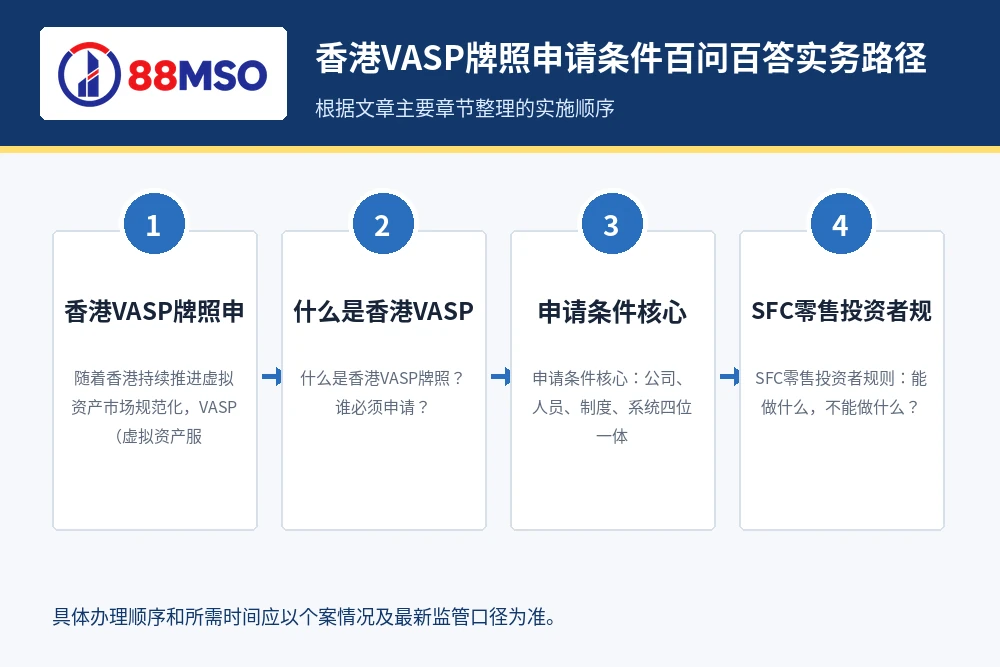
Q19:How many stages does the application usually consist of?
Can be divided into four steps:
- pre-assessment:business model、Equity structure、Determining the feasibility of license plate path;
- Documentation and system construction:system、internal control、Technical architecture、Hosting plan、AML process;
- Formal submission and inquiry response:regulatory communications、Supplementary parts、Process revision;
- Landed after approval:Personnel training、Trial run、Continuous Compliance Management。
Q20:Why are so many projects “stuck in the inquiry stage”?
The fundamental reason lies in insufficient preparation in the early stage。Regulatory inquiries often focus on “how do you demonstrate long-term compliance?”,rather than "do you know the rules?"。The answer must submit a chain of evidence:flow chart、Log sample、System screenshot、Exercise record、Board resolutions, etc.。
Q21:Can commercialization be carried out simultaneously during the application period?
The boundary between marketing promotion and customer engagement should be handled carefully,Avoid forming the facts of regulated activities before the license is clear。It is recommended to build a compliance base and grayscale testing mechanism first.,Then push the business online according to the regulatory rhythm。
seven、Common misunderstandings:Seems cost-effective,In fact, it increases the risk
- Myth 1:The template system can be directly applied
Supervision looks at “adaptability”,If the template does not match the actual business,Equivalent to invalid。 - Myth 2:Technical Security = Compliance Completed
Compliance also includes governance structure、Segregation of duties、Audit Trails and Customer Protection。 - Myth 3:Start business first and then apply for license
Once an unlicensed operation is constituted,Subsequent remediation costs and legal risks rise significantly。 - Myth 4:Only focus on application and not on operation
Continuous supervision after licensing is the main battlefield,annual review、Report、Spot checks require a normalized mechanism。
eight、How to create an “approvable、Operable、Scalable” VASP compliance system?
From a practical perspective,Successful projects usually have three levels of capabilities:
- Top-level governance capabilities:The board of directors and management clarify compliance responsibilities and risk appetite;
- Middle office control capability:AML、Risk control、legal affairs、Information security collaboration;
- Front desk execution ability:customer service、operations、Product team implements daily implementation according to rules。
For cross-border institutions,If Hong Kong MSO is also involved、SFC related licenses、Insurance or money lending business linkage,Group-level compliance structure design should be carried out as early as possible。Long-term cultivation such as 88MSO and 88MSOHong Kong financial licenseProfessional team for full case management,The value often lies not in "filling in information on your behalf",It’s about translating regulatory language into executable business processes.,Help enterprises reduce repeated inquiries and subsequent rectification costs。
Conclusion:VASP license is not the end,It is the starting point for long-term compliance operations
Hong Kong VASP supervision is becoming more refined、empiricization、Continuity。especially inSFC retail rulesandCold wallet asset isolationOn two major themes,What supervision expects is “real control”,Not "superficial compliance"。If an enterprise hopes to establish a long-term and credible virtual asset brand in Hong Kong,,Treat the application stage as a comprehensive medical examination:Is the system enforceable?、Is the technology auditable?、Does the team really understand compliance?、Is customer protection truly implemented?。
When you go through these key issues one by one,,VASP license will be more than just an access permit,It will also help you expand institutional cooperation、Win customer trust、Core assets that promote global layout。